
In our previous posts we have discussed different ways to intervene in the integral rehabilitation of buildings to provide a new use to society and enhance the essence of the existing building. On the one hand, we talk about the way to develop a global intervention of the project as in the rehabilitation of the old Palace Hotel in Alicante, keeping only its facades, to an intervention where the rehabilitation is a small part of it as in the Museum of Contemporary Art of Alicante, but we must not forget the importance of the urban space of the same. How can we approach the urban rehabilitation of a degraded environment while extolling the essence of an Asset of Cultural Interest?
The Castle of Santa Barbara in Alicante, listed as BIC (Bien de Interés Cultural), and its immediate urban environment is a great example of how to regenerate a degraded area by recovering this landmark of the city, giving rise to a progression between the urban fabric of Alicante and Mount Benacantil.
“How can we approach the urban rehabilitation of a degraded environment by extolling the essence of an Asset of Cultural Interest?”
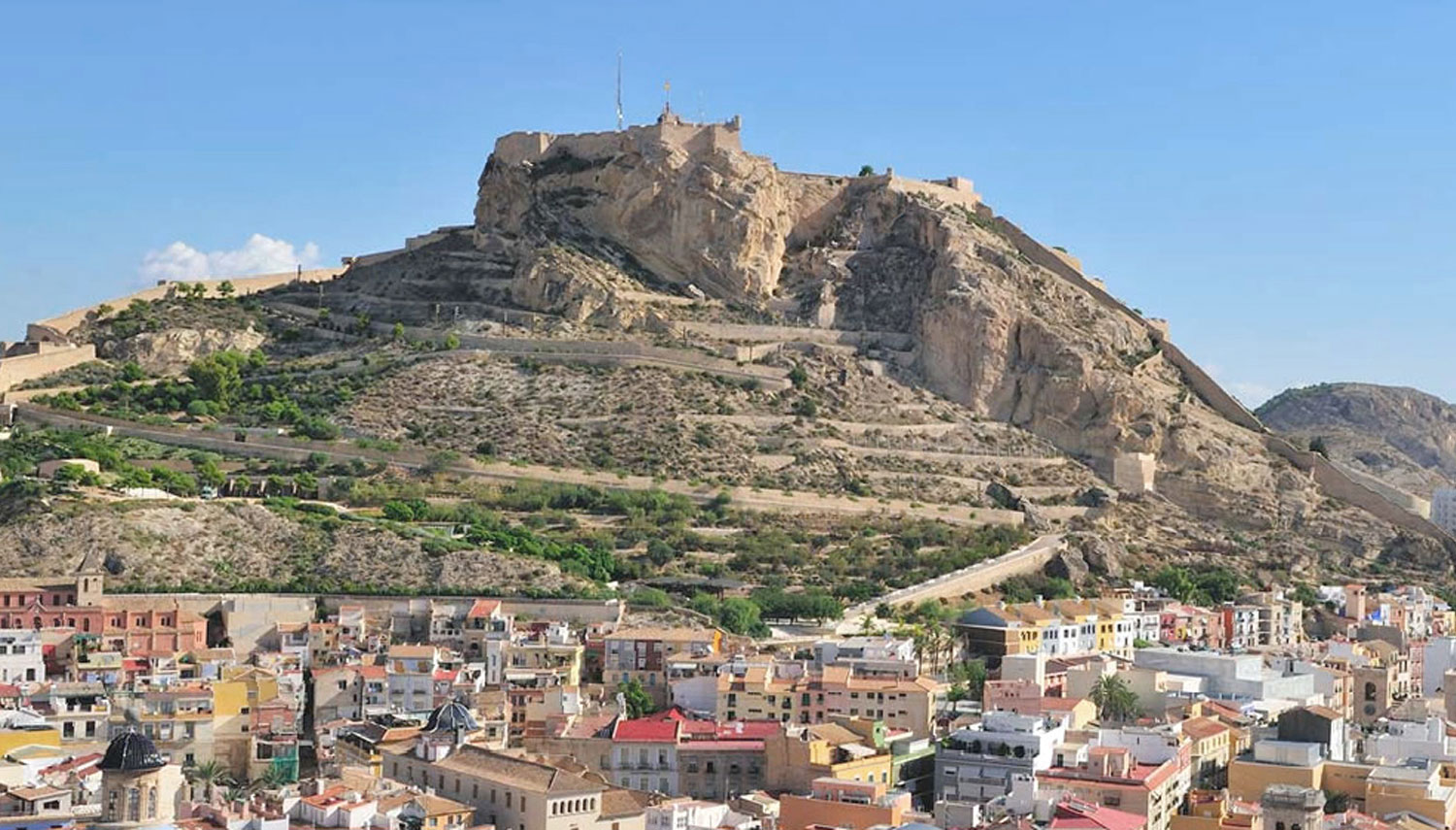
The historical setting of the castle dates back to the 11th century when the Arabs built it as a citadel on Mount Benacantil due to its great strategic value. However, practically nothing remains of this first fortified enclosure due to its continuous transformations throughout history. Other relevant chronological data are the Christian reconquest of the fortress by the future King Alfonso X in the thirteenth century or the reform of the castle by Philip II of Aragon during the second half of the century, turning it into a military fortress.
Since then, the castle has witnessed multiple battles until 1893 when it was dismantled and gradually deteriorated, serving as a shelter for plague and cholera patients and as a prison during the Spanish Civil War until the post-war period.
Finally, during the 1960s, the castle was restored and opened to the public, installing an elevator for access and in 2011 the last rehabilitation of the castle was completed. However, all the rehabilitation actions had been carried out in the BIC, but the urban regeneration of this fortified space had not been given the importance it deserved.
It was in 1994, when the architects Marc Bigarnet & Frédéric Bonnet won the second prize in the Europan 3 competition with their project “Inhabited Landscape” and as a consequence the Alicante City Council entrusted them with the realization of the project to create an urban park whose construction began in February 2000 and lasted 26 months.
“All rehabilitation actions had been carried out in the BIC, but the urban regeneration of this fortified space had not been given the importance it deserved.”
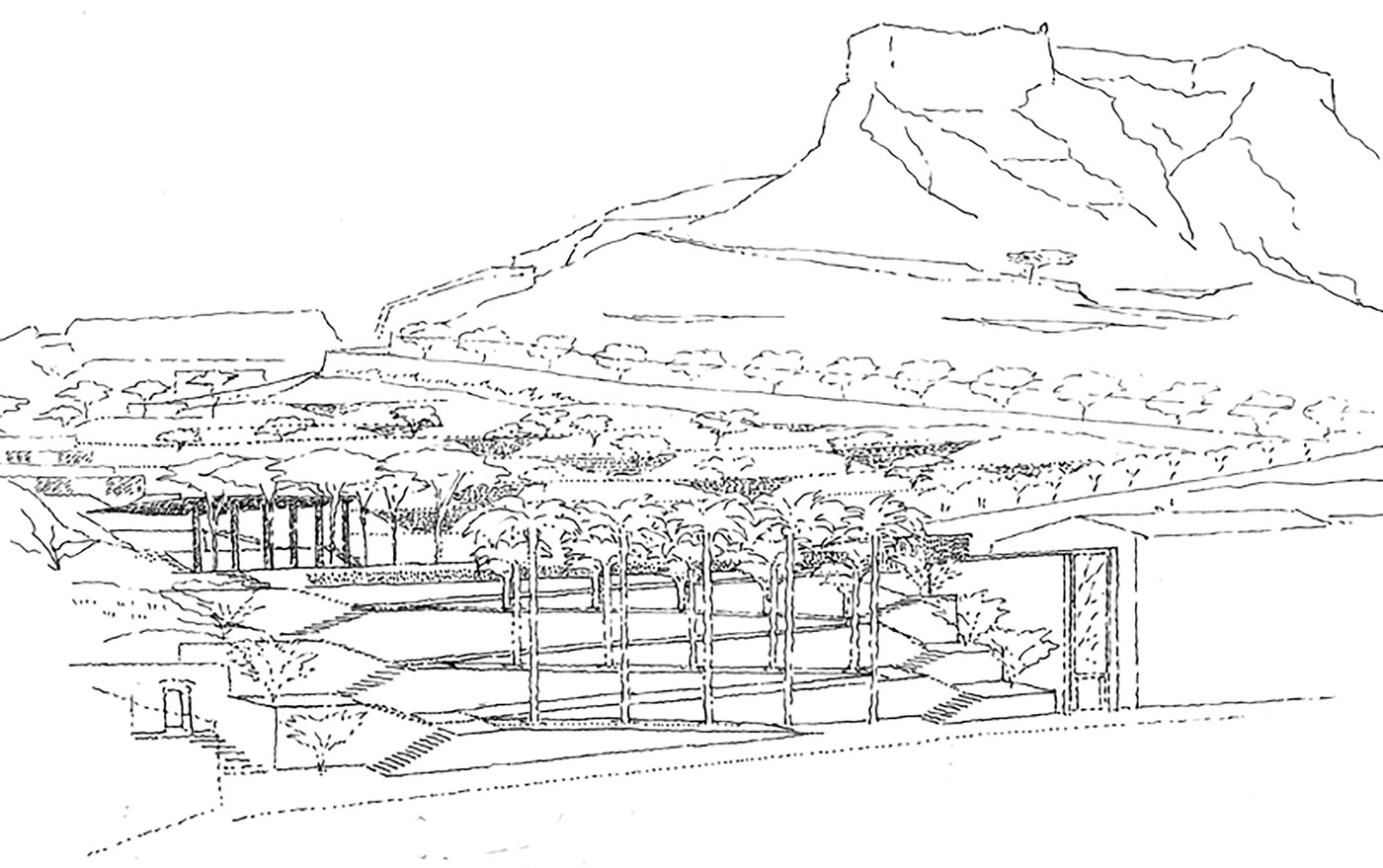
The initial proposal for the competition was intended to comprehensively cover the landscaping of this environment. The tectonic nature of the mountain and the site where the project was to be developed had been gradually degraded due to its landslides, the difficult access to the castle and the southwest orientation. For these reasons, the architects, through their proposal, wanted to reconquer the site by generating a transition between the urban fabric and this geographical landmark. This action aims to enhance the upper parts of the historic center of Alicante and revitalize the link between the degraded neighborhoods with the city center and the port, as well as recovering the union of the castle with a more natural environment.
“The architects, through their proposal, wanted to reconquer the site by generating a transition between the urban fabric and this geographical landmark.”
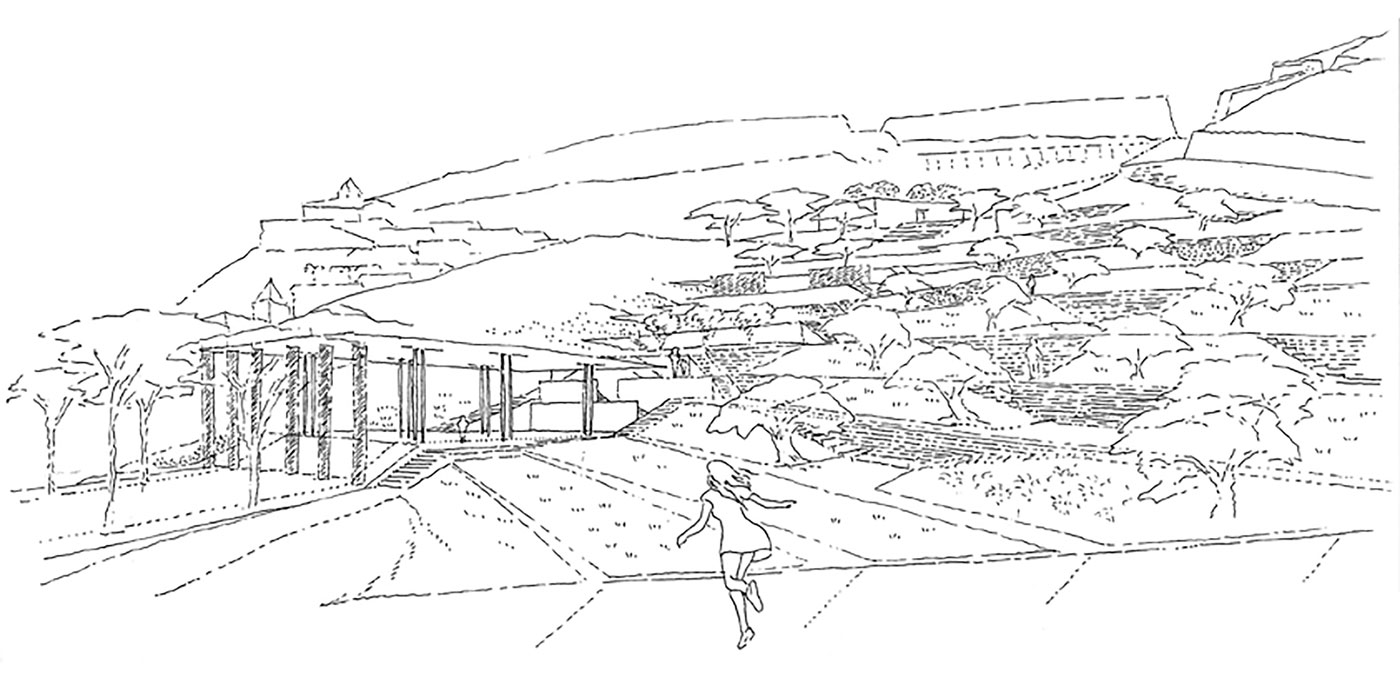
For the rehabilitation of the urban environment and the development of the Ereta de Alicante park, three strategies are followed to adapt to the dry and eroded terrain characteristic of the mountain.
On the one hand, the relationship between the urban and the fortified space is carried out in a progressive manner, maintaining the raw aspect of the mountain. The area related to the historic center acquires a more urban character and as you ascend towards the castle you will find different atmospheres: from a hillside with olive trees, to the Ereta square and the pine trees, followed by a vegetation of local holm oak and scattered grasses in the part closest to the slope.
On the other hand, technical requirements are used to develop the park as an opportunity to generate an accessible environment. For this reason, the fundamental elements of the park are closely related to these requirements: the boundary is a path that collects rainwater or the terraces on the slope of the olive trees settle the soil, reduce erosion and absorb water when it rains. In this way, these infrastructures become leisure elements by and for the city.
Finally, the third strategy seeks to relate the different scales of the project and the city of Alicante, connecting the architectural, urban, landscape and technical scales. This strategy can be seen, for example, in the terrain, which becomes a retaining wall to become a facade.
“For the rehabilitation of the urban environment and the development of the Erera de Alicante park, three strategies are followed to adapt to the dry and eroded terrain.”
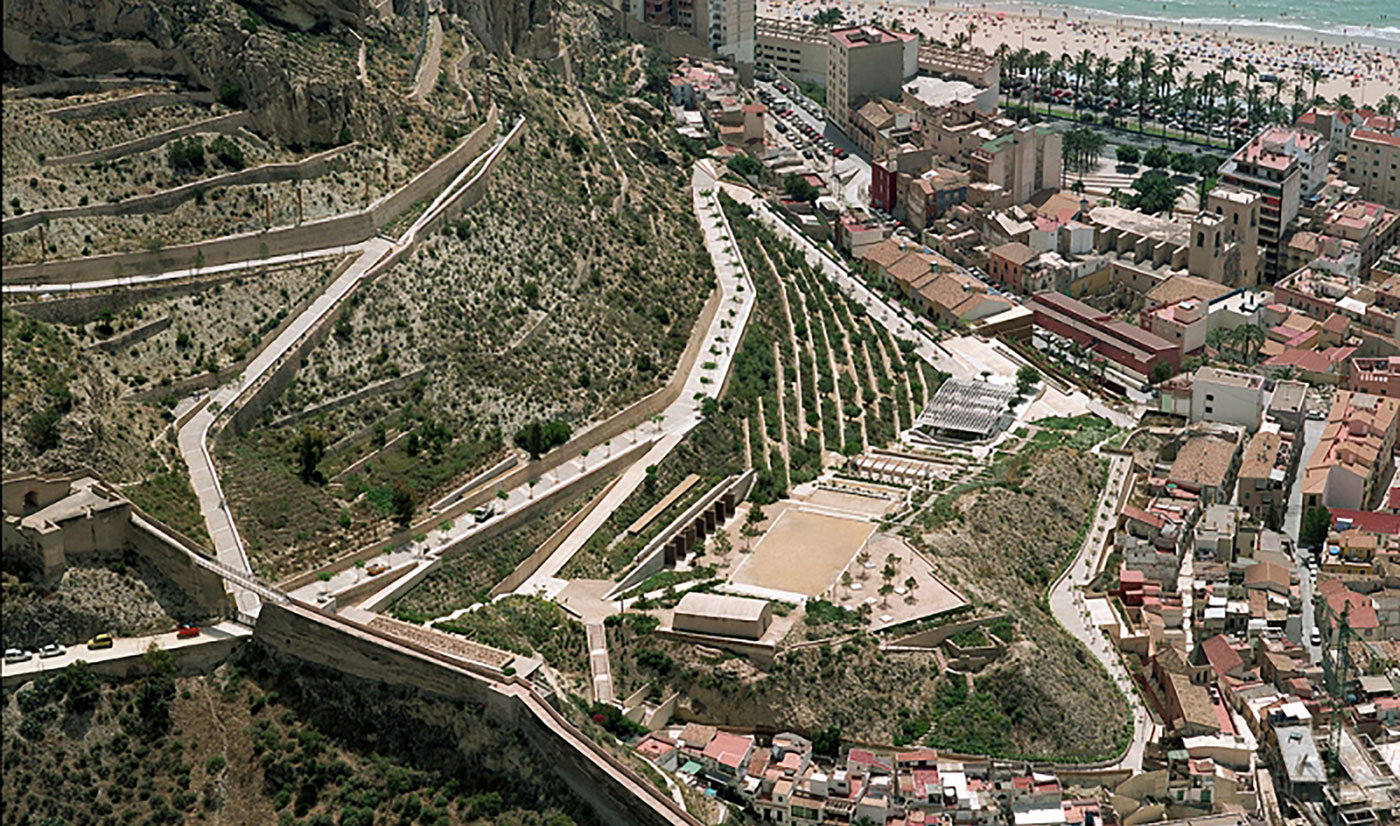
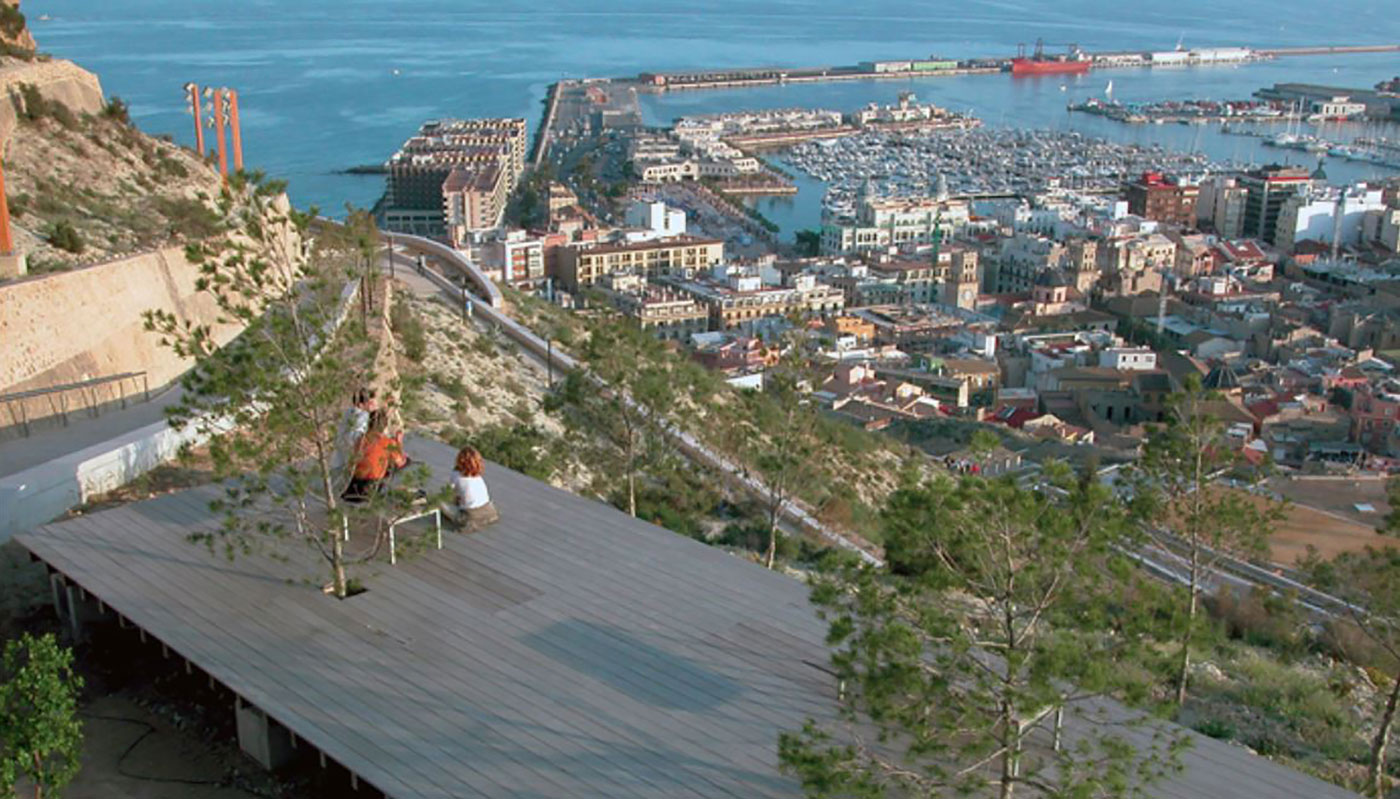
Thus arises this seven-hectare park articulated by various spaces and five buildings integrated into it, from more intimate and limited areas such as the ambulatories to larger meeting spaces such as the Ereta square in relation to the sea.
For these reasons, this park in Alicante has now become a connecting area where locals can stroll and relax, while enjoying the views of Alicante with the sea in the background.
For all these reasons, it can be considered a clear example of how the void generated by the ruin together with the related problems of acting in a BIC environment are an opportunity to regenerate the urban space and a good opportunity to recover the icon of the city, revitalizing a forgotten area.
“The void generated by the ruin along with the related problems of acting in a BIC environment are an opportunity to regenerate the urban space.”
Written by María Callejero Blasco, published by Cronotopos