
Interior design and renovation in Zaragoza
The proposal starts with the complexity of two floors joined together, a large number of useful square meters to distribute in several rooms: four bedrooms, three bathrooms, a multipurpose area, living room, kitchen-dining room and a storage room.
Surface area: 113 m2
Status: Completed
Timeline: 2019
Location: Zaragoza, Spain

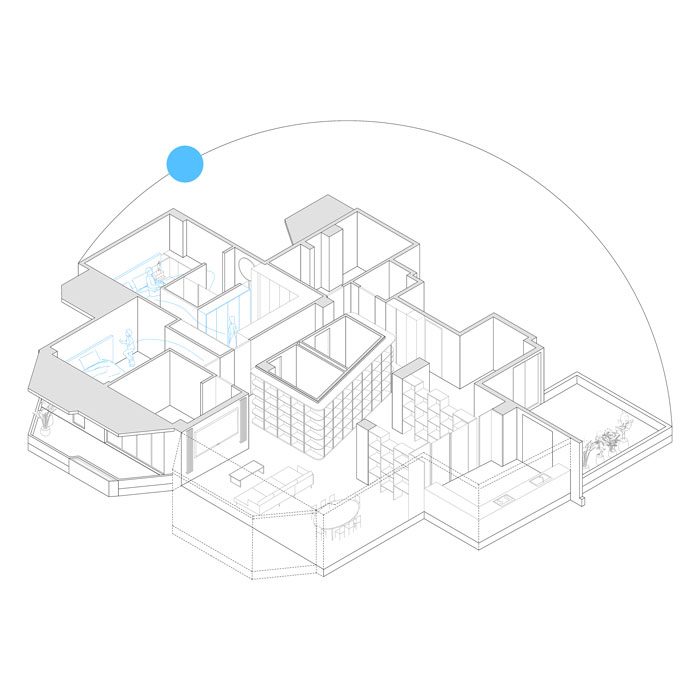
Its name comes from the ability to wander in it by having different circular paths. This gives us the capabilities to create an architecture that relies more on phenomenology. The common thread of the proposal are the different circulations that allow to live the house in a different way.
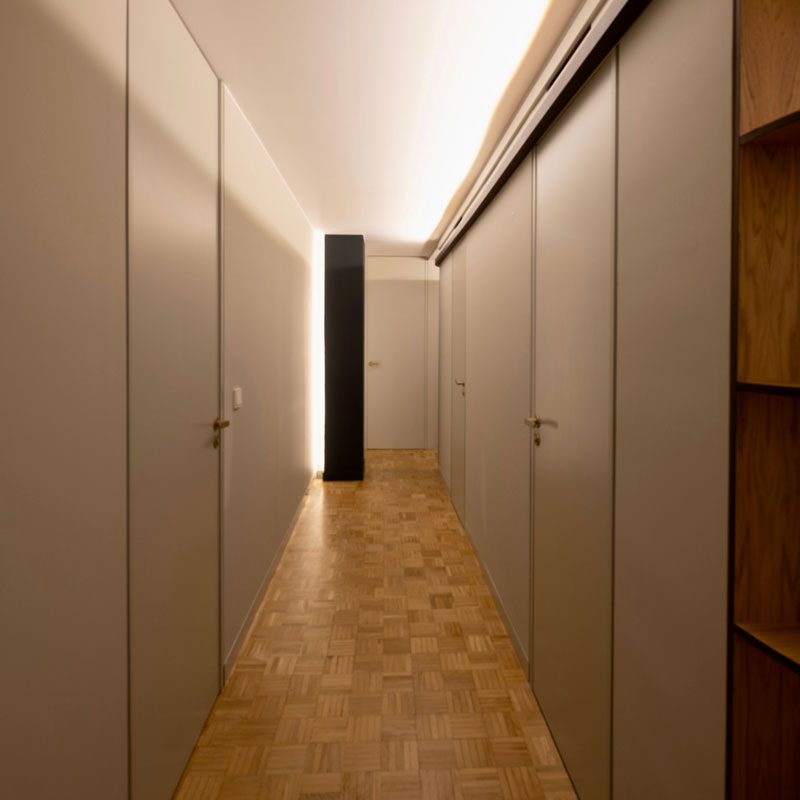
The challenge in this project was to make a coherent dwelling in two dwellings through a single storyline. The main objective was to eliminate corridors, for this purpose a central amoeba was generated, which creates a good circular circulation while dividing the day and night zones.
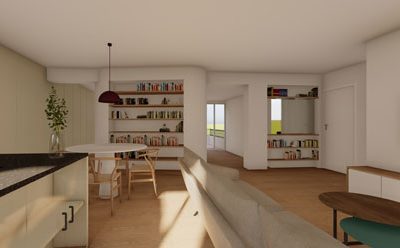
The amoeba is the most intense part of the house; it has an outer skin of shelves, and inside there are sanitary service areas, in addition, the facilities are part of the amoeba and provide services at the level of lighting and air conditioning.
It is important to highlight the amoeba’s lighting system, which allows the elimination of the aisle lights by changing a conventional aisle for one with indirect light from the top of the amoeba.


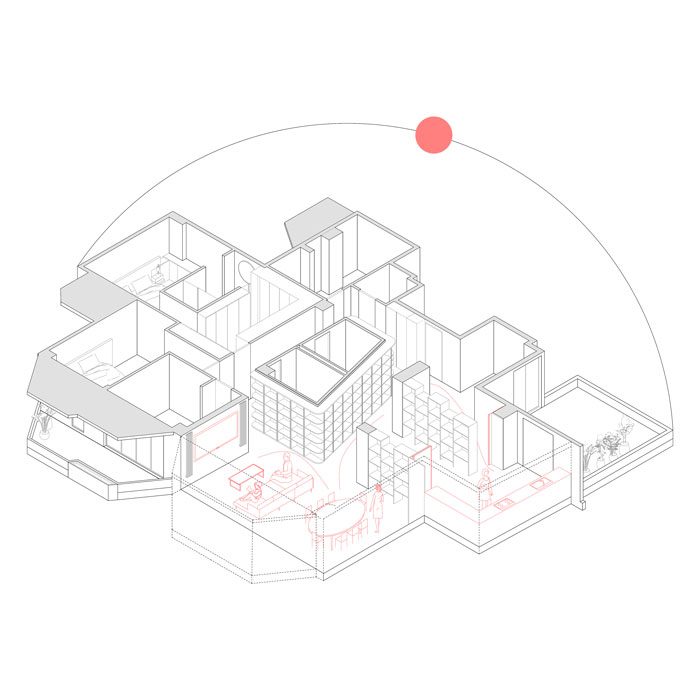
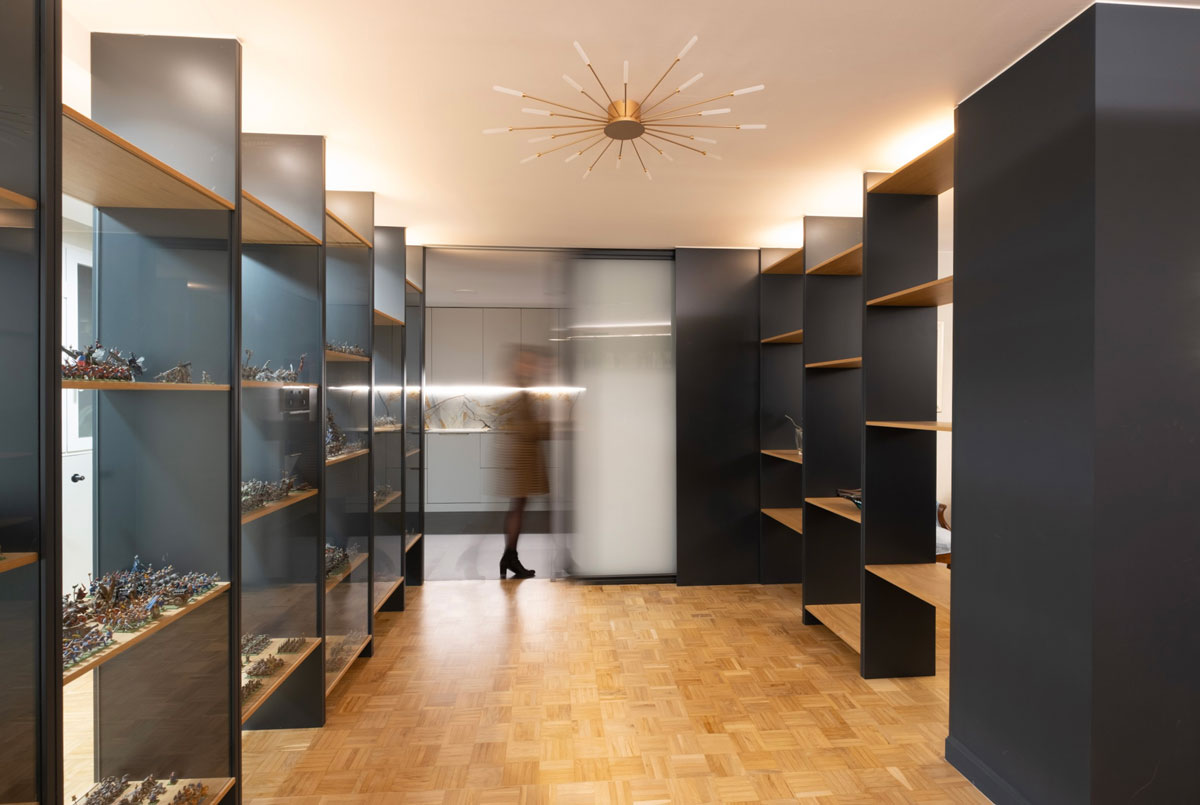
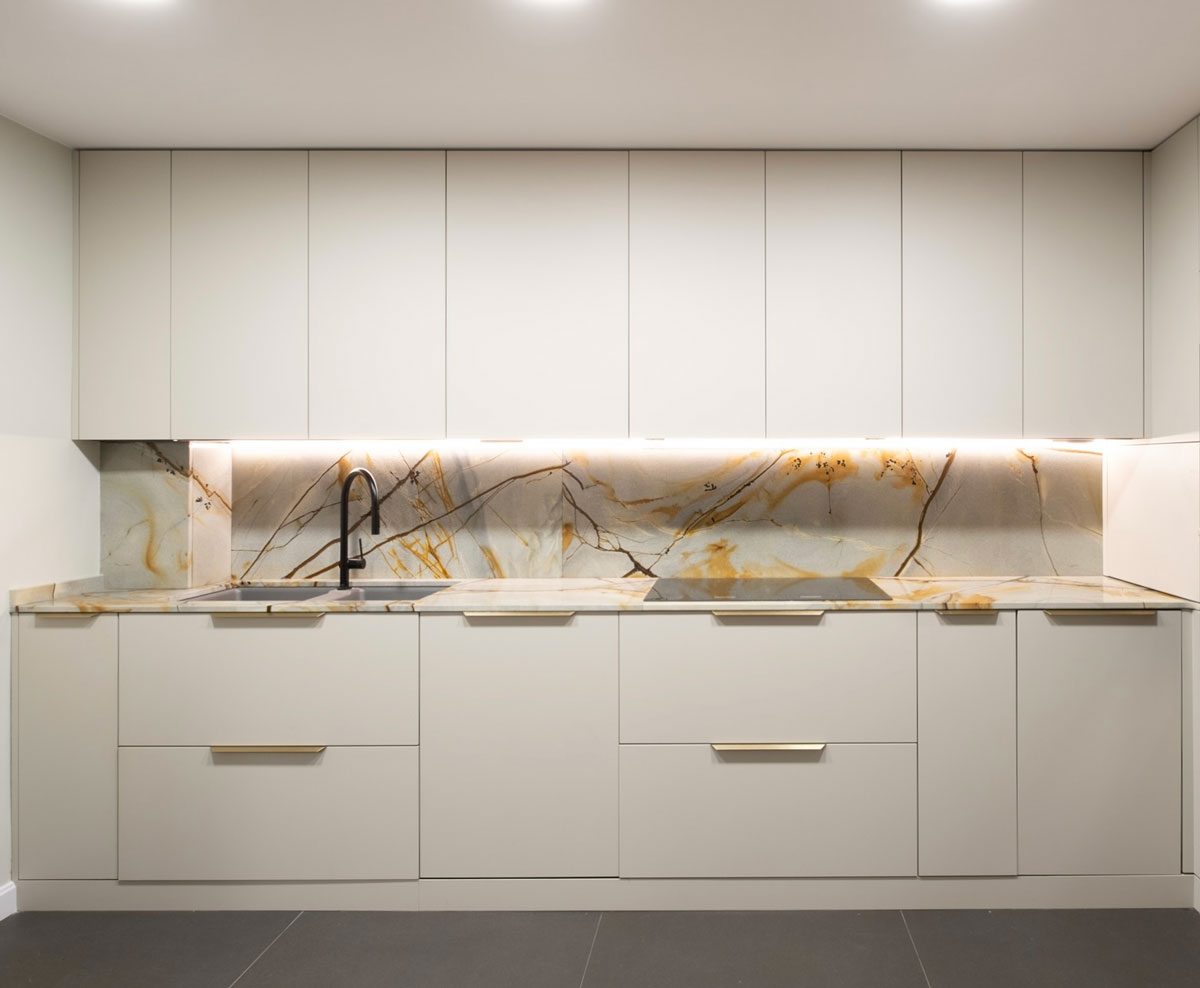
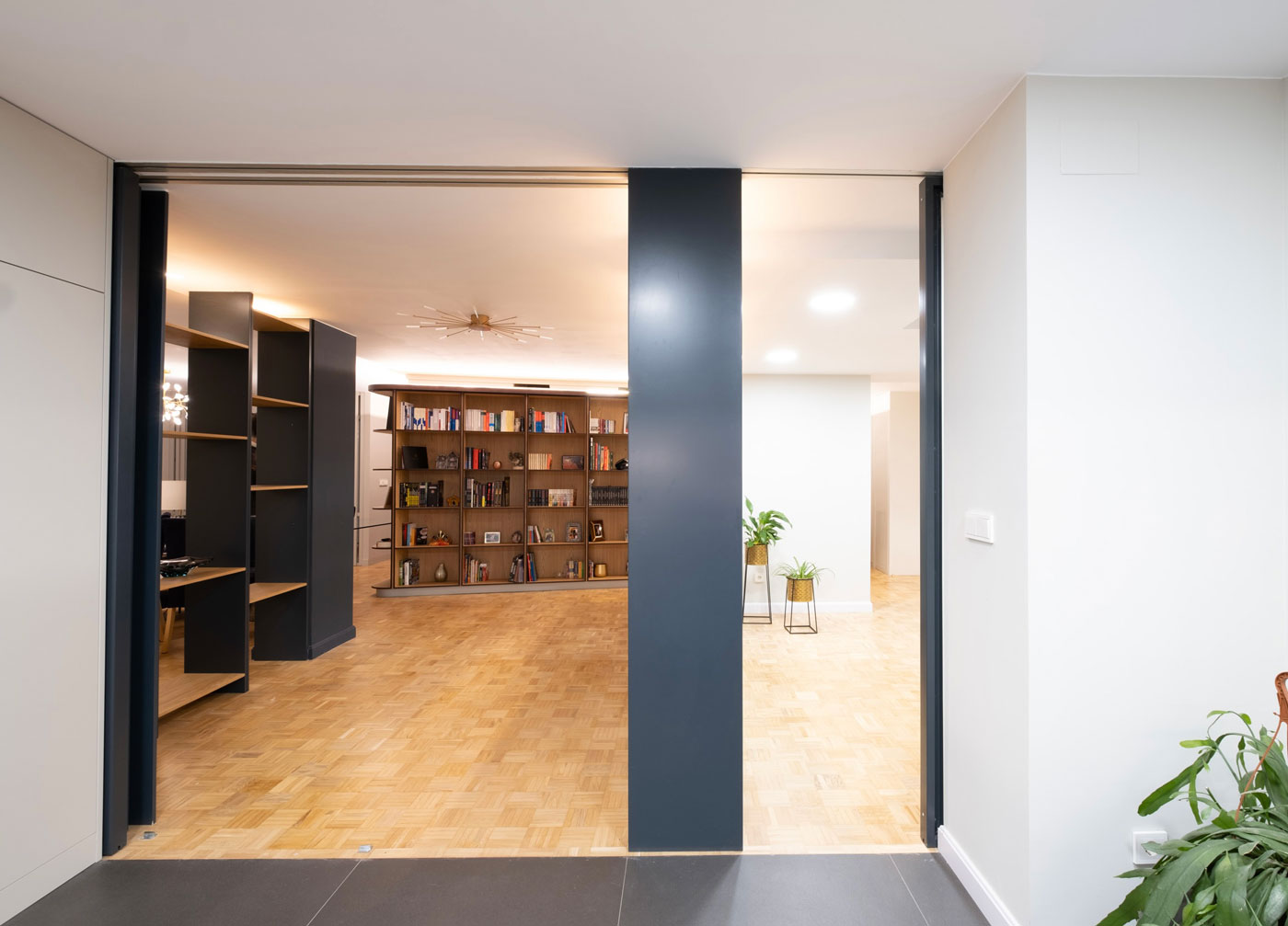
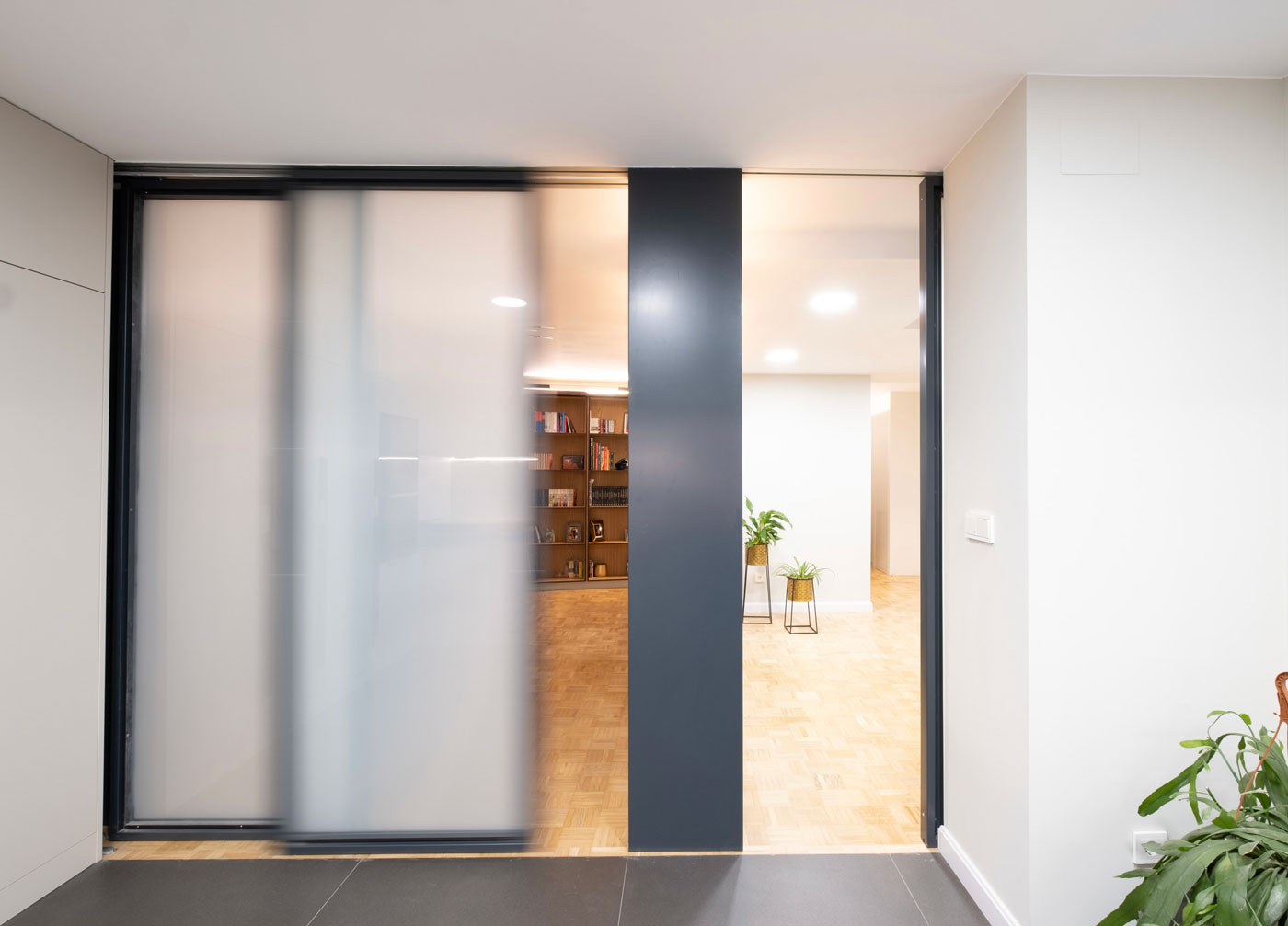
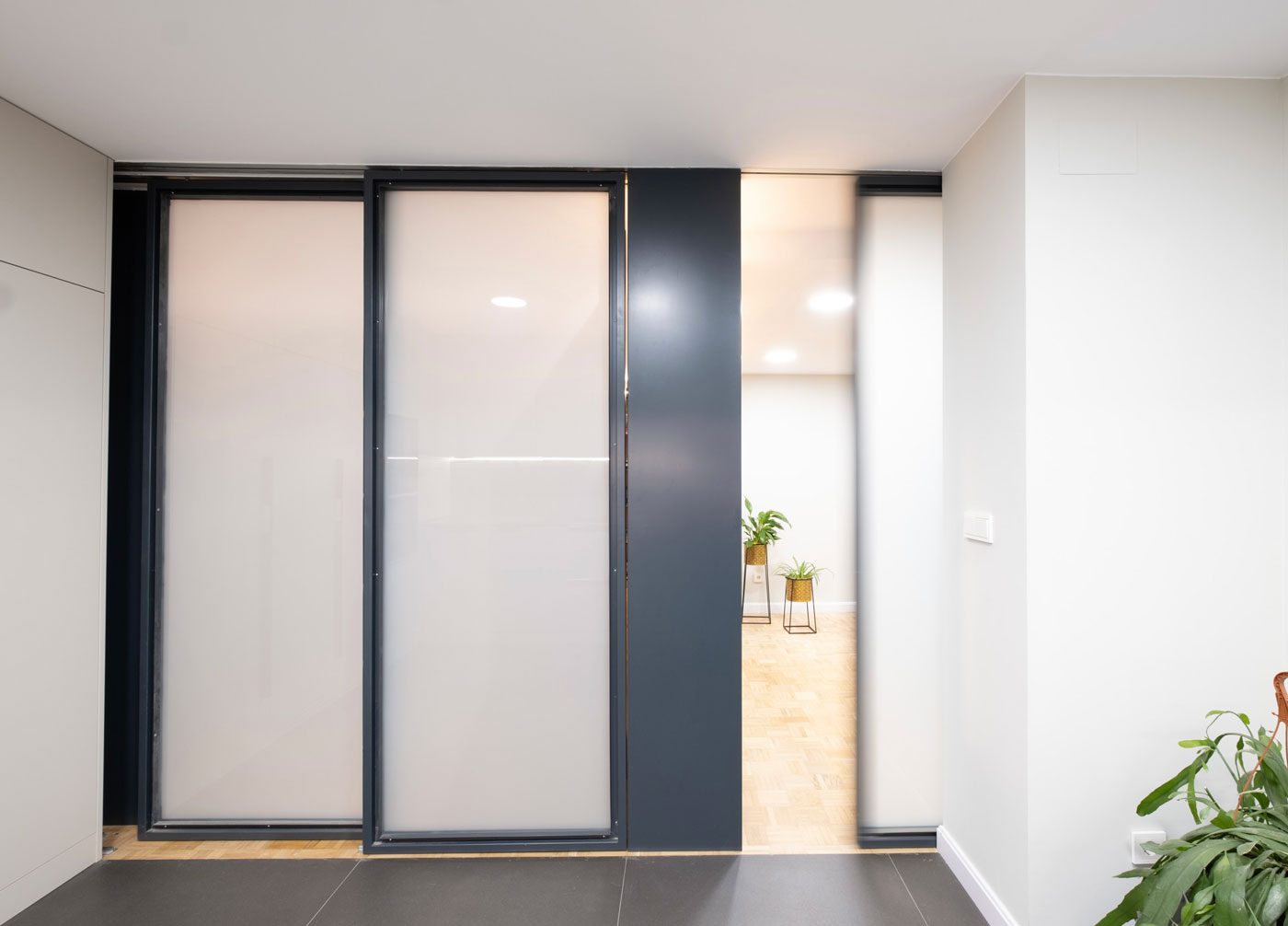
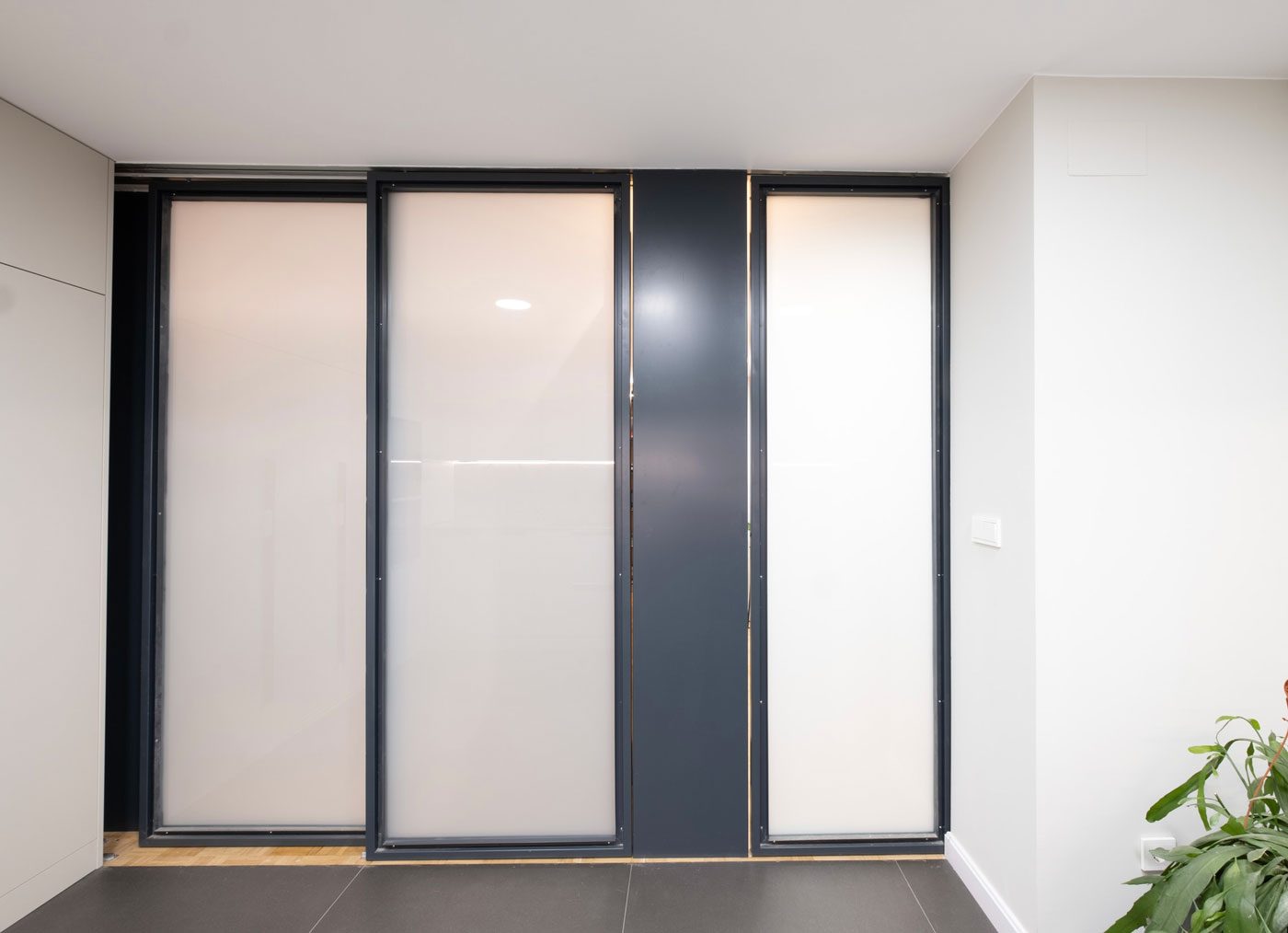
The kitchen is connected to the day area by means of an enclosure that can be completely hidden, allowing the kitchen to escape from the rest of the house. It is a versatility in the use of the same since it provides one more circulation to the house and at the same time the possibility of being closed privatizing only kitchen. The centerpiece of the kitchen is the quartzite countertop that creates a backdrop to the living space.
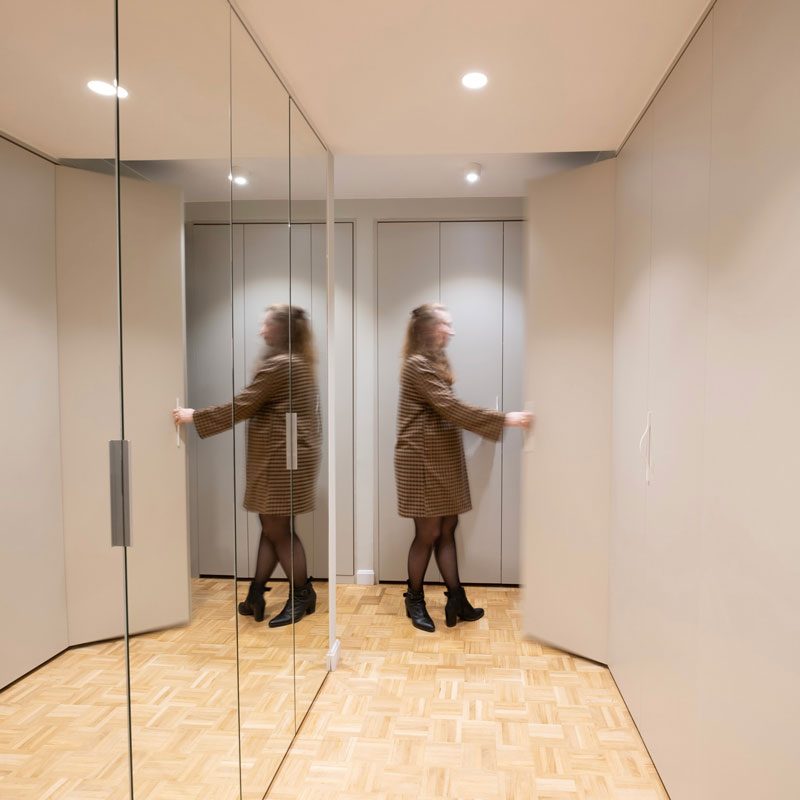
For the accesses to the bedrooms, a continuous skin was created with the partition walls to create an uninterrupted continuity. On the other hand, the amoeba of the master bedroom manages to articulate the bedroom with the dressing room divided by a two-stroke bathroom that circulates and prioritizes the circulation between dressing room and bedroom.

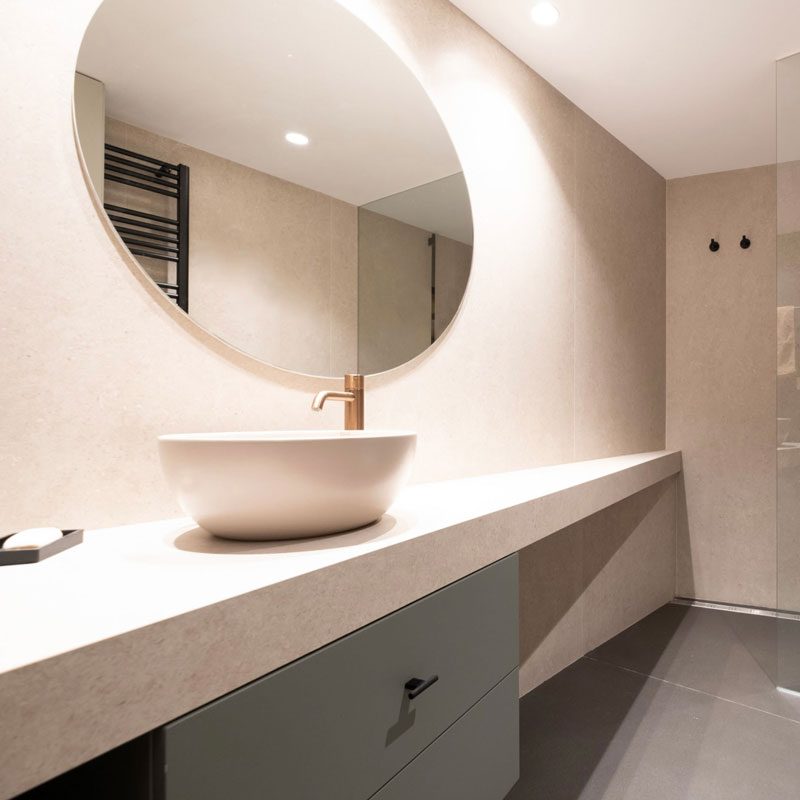
The bathrooms are designed with the same materials and aesthetics, differentiating the color of the furniture. The interesting thing about these bathrooms is the washbasin countertops, which are made with the same porcelain tile that is used as tiling. So it is a continuous countertop from which a piece of furniture hangs and a washbasin rests.
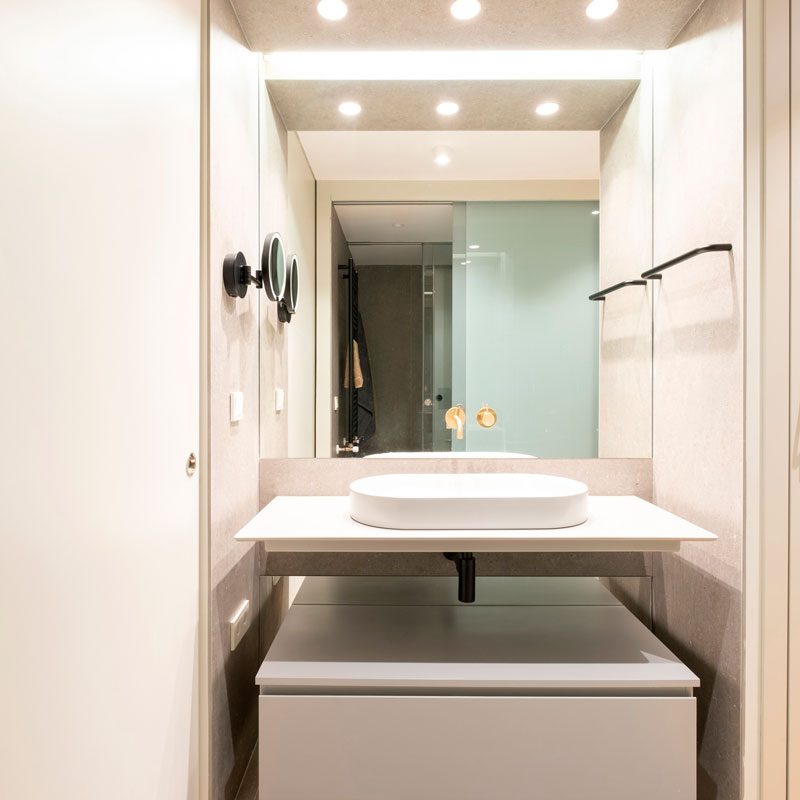
The bedroom sink area is treated as a still life, with a continuous back mirror that occupies the entire space, along with a more special sink piece and a recessed faucet that stems from that mirror.

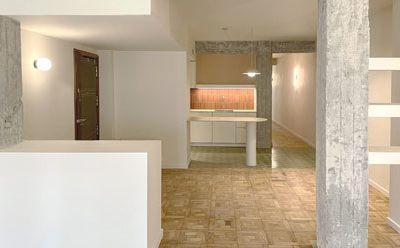
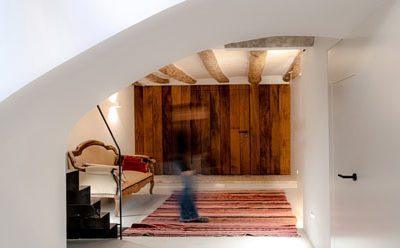
As the main material and protagonist of the house we must highlight the floor, since it is the original one. During the work, the pavement of the wet areas (bathrooms and kitchen) was found to be missing the wood flooring of the rest of the house.
As a result, reconstruction work was carried out with the objective of equalizing and maintaining it.
This wooden floor was important to combine with different wooden implements that appear in the house, especially the central amoeba.
In the central amoeba, two different wood tones were integrated, creating contrasts between them and emphasizing the edges to generate more depth. As a counterpoint to this, the lattice shelves that visually divide the day area are designed in an anthracite tone to generate contrast and distinguish both elements.


Drawing by Sofía Scollieri, Architecture intern at Cronotopos Arquitectura.