
Building renovation and interior design
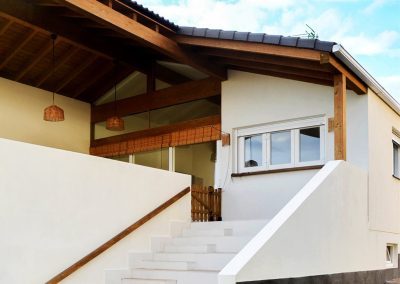
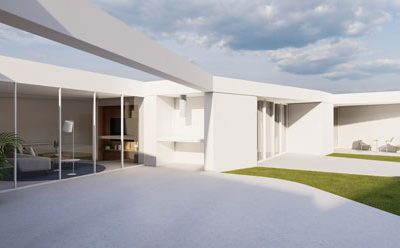
The rehabilitation project of Villa Viñes consisted of extracting and giving the house a more modern character, achieving a gesture that links modernity and Alicante tradition.
Surface area: 390 m2
Status: Completed
Timeline: 2021 – 2023
Location: Alicante, Spain
Type of work: Building renovation

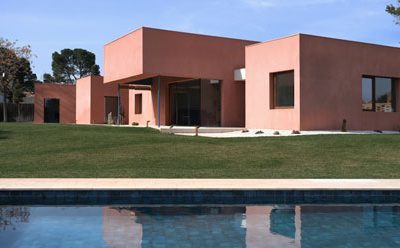
The façade wall that limits the plot from the street was originally built in masonry, but it was not exposed, so it was proposed to remove the cladding that covered it to show the nature of the material so that the wall could breathe better.
The play of materials between stone and metal creates a contrast with the wood of the door resulting in a light but very representative composition.
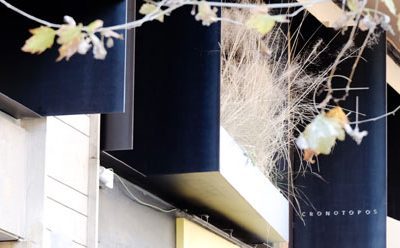
CRONOS is shown in the masonry, where an almost total extraction of the facade has been achieved with a completely smooth material that together with its original stone, which has been brought to light by removing the cladding that hid it in some areas, creates different textures, making it appear friendlier through use.


It was proposed that the openings have no partitions, to extract and give the house a more modern character, achieving a gesture that links modernity and tradition, giving visual depth to the wall and at the same time becoming a light element.
The lightness of the metal together with the heaviness of the stone gives this distinctive touch to its architectural design, adding that Alicante element that contrasts with the colorful landscaping and the hemp blinds.


The old window railings are reused as decorative elements of the garden, giving a unique and nostalgic touch to what once was.
On the other hand, ceramic lattices take their morphology from tradition, acting as a filter that is produced in a way adapted to the needs of the architecture of the dwelling.
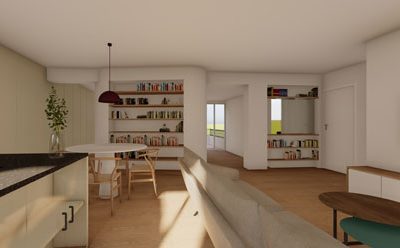
In the interior of the house, the central amoeba stands out. A multifunctional piece of furniture that has several uses: toilet, shelving, storage and stairs leading to the upper floor.
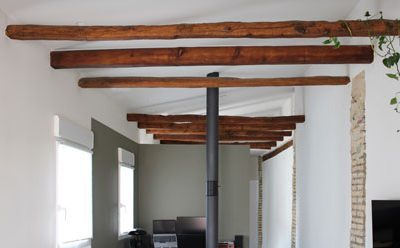
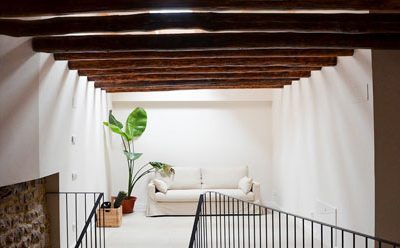
In the staircase, the stone treads meet the wooden risers, being defined by wooden slats that act as shelves, hiding it in a strategic and decorative way. These same slats are translated into the ceiling, creating a rhythm in the house and creating a holistic space in the living room.


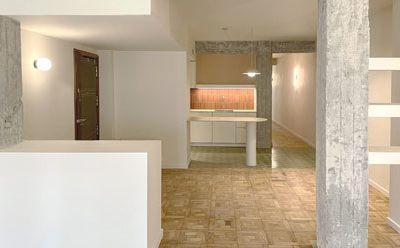
The central amoeba divides the kitchen and living room areas, following a strategy in which the kitchen furniture and the guest bathroom are camouflaged and integrated into the interior.
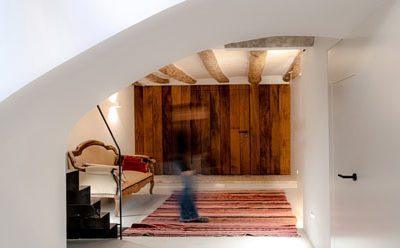
From the kitchen and the living room you can appreciate the communication of the spaces and how the light enters the rooms from the arches, which give this elegant and distinctive touch to the house.


Most of the arches are original to the house before the rehabilitation as openings in the portico, but were later rehabilitated as windows made with metal carpentry.


The three-stroke bathroom, so called because of its distribution in three zones: washbasin, shower and bathtub. It was designed with natural stone flooring, dividing its spaces through glass partitions with low height to maximize the entry of light from the large bathtub views resulting in a neat and bright bathroom.

Drawing by Sofía Scollieri , Junior Architect at Cronotopos Arquitectura